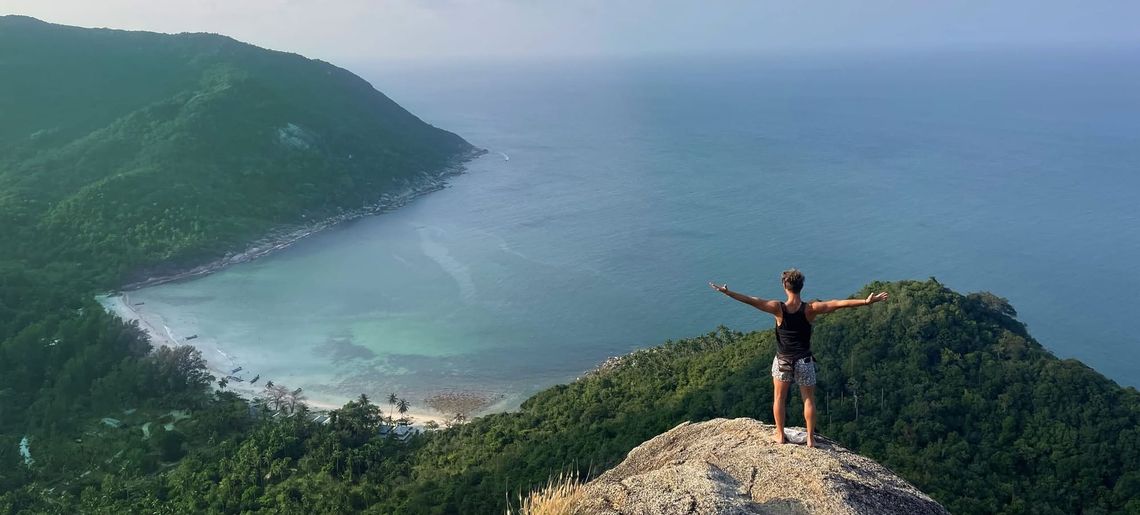
Why creating freedom doesn’t mean feeling free.
We’ve learned how to change the world around us. But have we learned how to feel at home in the world we’re creating?
Imagine you’ve finally made it. You left the job that was draining your soul, ended a relationship that no longer felt right, moved somewhere beautiful, built your own business, or created the financial independence you’ve been dreaming of. Congratulations! You’ve successfully changed your life. Maybe even beyond what you once thought possible.
And yet, something strange happens.
Your mind is already looking for the next thing to fix, improve, achieve, or protect. The freedom you’ve worked so hard to create suddenly comes with a whole new collection of responsibilities, expectations, and worries. What if you lose what you’ve built? What if you make the wrong decision? What if there’s still something missing?
Welcome to the Freedom Paradox. ♡
Why outer freedom doesn’t guarantee inner freedom
We spend an enormous amount of our lives trying to create freedom. Freedom from financial worries, from expectations, from exhausting routines, from relationships that limit us, or simply from having to do things we’d rather not do. And there’s absolutely nothing wrong with that. Changing our circumstances can be one of the most beautiful expressions of our creativity, courage, and willingness to take responsibility for our lives. But there’s something we often overlook along the way.
The freedom we create around us and the freedom we experience within us are not necessarily the same.
You can have all the time in the world and still feel pressured. You can have enough money and still worry about losing it. You can be surrounded by people who love you and still feel alone. You can move to paradise and discover that your mind apparently purchased a one-way ticket to come along.
How thoughtful of it. ; )
Our outer circumstances influence how we feel, of course. Financial stability, healthy relationships, personal autonomy, and a supportive environment matter enormously. But they don’t automatically determine our inner experience.
This is the difference between outer and inner freedom. Outer freedom describes the possibilities and choices available to us in our lives. Inner freedom describes our capacity to experience those possibilities without being constantly driven by fear, pressure, or the need to escape our present circumstances.
Between the freedom we want, the freedom we’ve created, and the freedom we actually experience, there can be a considerable distance. At Being Yourself Rocks, I call this the Freedom Gap. And discovering that gap might be one of the most important steps toward understanding your relationship with freedom.

We’ve never had so much. So why do we still feel we need more?
Let’s expand our perspective for a moment.
We live in extraordinary times. Never before have so many people been connected through such extraordinary technologies. We can communicate across continents in seconds, access more information than we could possibly process in a lifetime, and create things that would have seemed like magic just a few generations ago. Well, technically, we’re still living on a giant rock flying through space, held together by invisible forces. So maybe magic isn’t entirely off the table. ✨
Especially in the Global North, many of us live with an abundance of opportunities, products, services, information, and choices. And while this abundance is distributed very unequally, it has fundamentally changed the challenges many people face. We haven’t simply eliminated scarcity. We’ve created new relationships with it. Having more choices doesn’t necessarily make decisions easier. Having more information doesn’t automatically make us wiser. And possessing more doesn’t guarantee that we experience abundance.
Sometimes, quite the opposite.
The more we accumulate, the more we may become concerned with preserving it. The more possibilities we see, the more we may fear missing out. The more information we consume, the harder it can become to recognize what actually matters to us. Our minds are remarkably creative when it comes to finding new reasons to worry. Give them a problem, and they’ll happily work on it. Solve the problem, and your mind will celebrate for approximately three seconds before politely informing you that it has already found three new things to worry about. And this brings us to a fascinating question: What if our greatest challenge isn’t always creating more freedom, but learning how to experience the freedom we’ve already created?
An uncertain world and our search for security
There’s another dimension to this conversation.
We’re living through profound transformations. Technological developments are changing how we work, communicate, and relate to one another. Our interconnected world is revealing both extraordinary possibilities and extraordinary vulnerabilities. At the same time, we’re confronting ecological challenges that remind us that even our beautiful planet has limits. And there’s something particularly interesting about the times we’re entering. Our past is becoming a less reliable guide to our future. Of course, human beings have always lived with uncertainty. History is full of transformations, disruptions, discoveries, and unexpected turns. But as the pace and complexity of change increase in many areas of life, our previous experiences don’t always provide the orientation we’re looking for.
We can gather more information, develop better predictions, create more sophisticated systems, and prepare for increasingly complex scenarios. And all of these things can be incredibly valuable.
But can we ever create enough certainty to eliminate uncertainty?
And do we actually need to?
There’s an opportunity hidden within this question.
We’ve spent centuries developing extraordinary tools to understand and influence the world around us. What might become possible if we brought the same curiosity, creativity, and dedication to understanding our relationship with ourselves? Not to retreat from the world, but to participate in it more consciously. Not to replace outer security with inner security, but to discover how both can support each other. Because ultimately, freedom isn’t only about the circumstances we create. It’s also about how we relate to ourselves within those circumstances.
From information overload to information sovereignty
Let’s take our relationship with information as an example: Every day, we’re surrounded by an almost endless stream of messages, opinions, opportunities, warnings, predictions, and invitations to pay attention. Some of them genuinely matter to us. Others simply know how to get our attention.
And attention is a fascinating thing.
Have you ever noticed how easily a piece of information can pull you into an emotional reaction, even when it has almost nothing to do with your actual life?
One alarming headline, one provocative comment, one perfectly curated Instagram life, and suddenly your nervous system has decided that something requires immediate attention.
And before you’ve even finished processing one thing, something else appears. Another message. Another idea. Another interesting article. Another possibility. You start looking into one subject, discover something fascinating along the way, follow that thought into the next one, and suddenly you’re doing something entirely different from what you originally intended.
I sometimes call this Squirrel Mode. 🐿️
Always moving, always finding something else to investigate, explore, or take care of. Sometimes wonderfully creative and full of discoveries. Other times, an endless journey from one distraction to the next, without ever really arriving anywhere. The question is: Does everything that catches our attention actually deserve it? In communication theory, we often distinguish between signal and noise. A signal carries information we’re trying to receive, while noise interferes with our ability to recognize it. I find this a beautiful metaphor for our relationship with ourselves and the world. What happens when we begin to recognize the difference between information that genuinely helps us navigate our lives and information that primarily activates our fears, expectations, and habitual reactions?
We start developing something I like to think of as information sovereignty.
The ability to consciously choose where we direct our attention, how we interpret what we encounter, and which information we allow to influence our decisions.

Imagine an archer standing in a field, surrounded by a thousand moving targets. The challenge isn’t learning how to shoot faster. It’s discovering which target actually matters. And here’s where it becomes particularly interesting: The clearer our relationship with the information we receive, the more clearly we can begin to observe our own inner responses. We become more aware of the stories we tell ourselves, the patterns we repeat, and the assumptions through which we interpret reality. Our inner world becomes a little less noisy. And as our inner signals become clearer, something changes in the way we express ourselves, communicate, make decisions, and contribute to the world around us. We don’t simply become better at receiving signals.
We become more conscious of the signals we’re sending.
Of course, not everything valuable arrives as an obvious signal. Sometimes curiosity leads us into the unknown, where something that initially appeared meaningless becomes the beginning of an extraordinary discovery. Information sovereignty isn’t about controlling every input, but developing a conscious relationship with what we receive, what we experience, and what we create.
Inner safety: What changes when we stop needing everything to be certain?
Let’s return to our original question: What does it actually take to feel free?
For many of us, freedom and security seem to exist in an uncomfortable relationship. We want the freedom to explore, change, create, and follow our curiosity. But we also want stability, familiarity, and the reassuring feeling that everything will somehow turn out okay. Sometimes we even sacrifice one in pursuit of the other. We stay where we are because change feels uncertain. Or we keep changing our circumstances because staying with what we feel inside seems even more uncomfortable. And sometimes, we finally create the freedom we’ve been longing for, only to discover that we still don’t feel safe enough to enjoy it. This is where inner safety becomes such an interesting part of the conversation. Inner safety, as I explore it in my work, is about developing a relationship with ourselves in which we can experience uncertainty, vulnerability, and change without automatically experiencing them as threats to who we are. It doesn’t mean that fear disappears, that everything becomes comfortable, or that we no longer need security in our external lives. It means that we begin to recognize our capacity to be with ourselves, even when life doesn’t unfold according to our plans.
And this can change something fundamental.
Instead of creating our lives primarily to escape what we fear, we can increasingly create from curiosity, trust, love, and the joy of being alive. Not because fear is wrong or because every act of creation must come from some perfectly aligned inner state. We’re human, after all. Beautifully complicated, occasionally confused, and remarkably good at making things more dramatic than necessary. Give our minds a little uncertainty, and they’ll happily produce an entire disaster movie. Complete with dramatic music and a sequel nobody asked for. But becoming aware of what moves us gives us more freedom in how we respond. And this brings us to a concept that is central to Being Yourself Rocks.
Conscious creation: Bringing your inner and outer worlds into alignment
I don’t believe that inner freedom means withdrawing from the world, becoming indifferent to our circumstances, or learning to accept everything exactly as it is. Life is change. And creating change is part of what makes being alive such an extraordinary adventure. Our inner and outer worlds are constantly influencing each other. What we experience shapes how we perceive the world. What we perceive influences the choices we make. And those choices create new experiences that, in turn, shape our relationship with ourselves. It’s an ongoing conversation between who we are and how we live. The more consciously we participate in this conversation, the more possibilities we discover for creating a life that reflects what truly matters to us.
I call this Conscious Creation.
It’s not about becoming someone who never experiences fear, doubt, or uncertainty. It’s about developing the awareness and inner clarity to recognize what’s moving us and taking responsibility for what we create from that place. And that’s where freedom can become something more than a collection of external possibilities. It becomes something we can experience.
Bring who you are and how you live into alignment.
For me, this is at the heart of Master Your Freedom: learning to create, feel, and live our freedom by bringing our inner experience and outer choices into alignment.
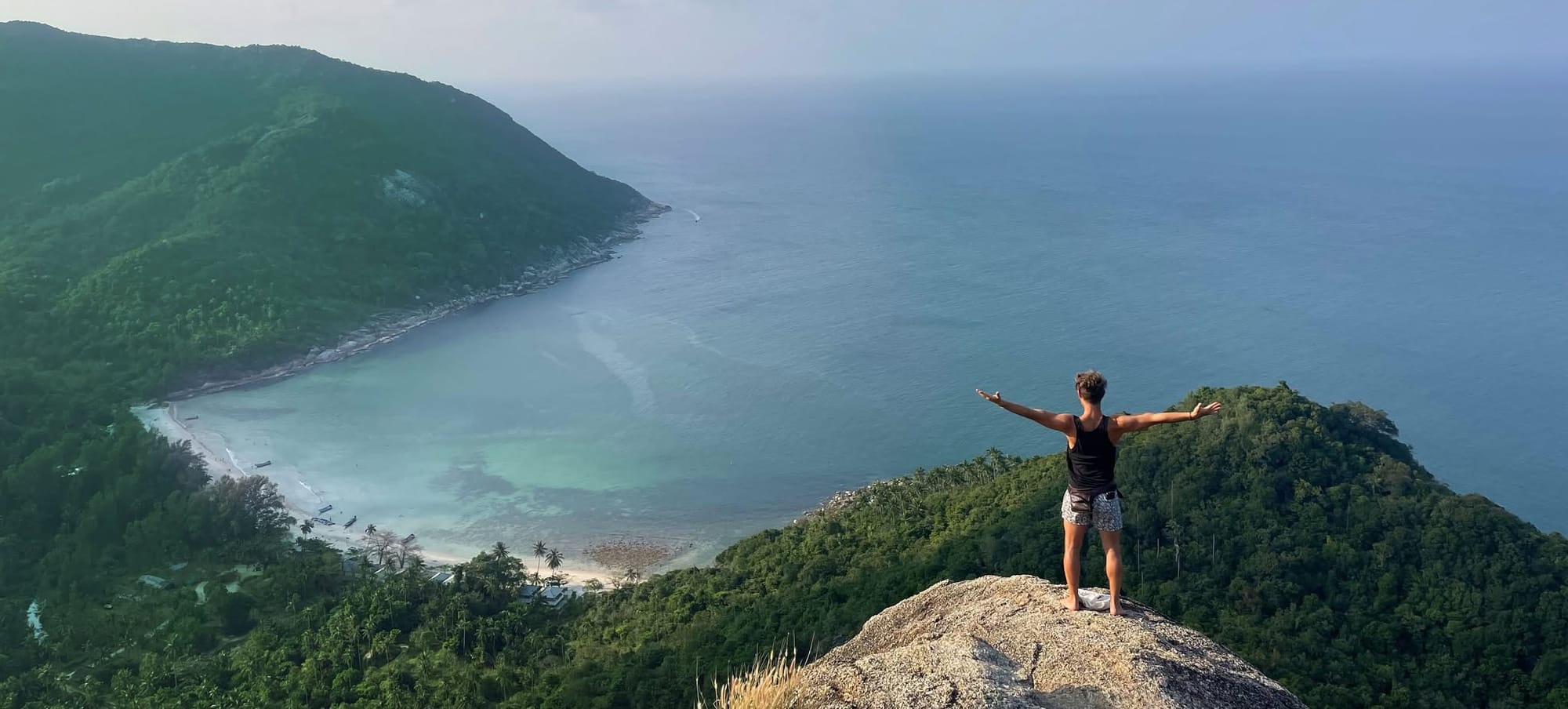
Your freedom is worth exploring
Before you continue with your day, I’d love to invite you into a little experiment:
Think about the life you’ve created so far. The changes you’ve made, the challenges you’ve overcome, the people you’ve met, the opportunities you’ve discovered, and the things you’ve learned along the way. Take a moment to acknowledge how much you’ve already created. And then ask yourself:
How much of the freedom I’ve created am I actually allowing myself to experience?
You don’t need to answer this question publicly. In fact, the most important conversation here is the one you have with yourself.
If you’re curious to explore this further, I’ve created the Freedom Map, a free 20–30 minute reflection to help you discover your personal Freedom Gap and explore what freedom means to you today.
And if you’d love to explore these questions together with other curious humans, I’d like to invite you to The Freedom Call, our community gathering where we explore what it means to be authentically human, share our experiences, and discover new perspectives together. Because while your journey is yours, you don’t have to travel alone.
Being Yourself Rocks. Being Together Rocks, Too! ♡
With love & presence,
Felix ♡ॐ
P.S. Has reading this changed your relationship with freedom in any way? I’d love to hear your thoughts in the comments. But most importantly, I hope you’ll take a moment to explore that question for yourself.